Greening Earth · Greening Sahara
A desertification prevention project in the Sahel region — the frontline of the Sahara. We establish an agroforestry model linked to the sustainable livelihoods of local communities.
Sahel Desertification Prevention
Greening Sahara
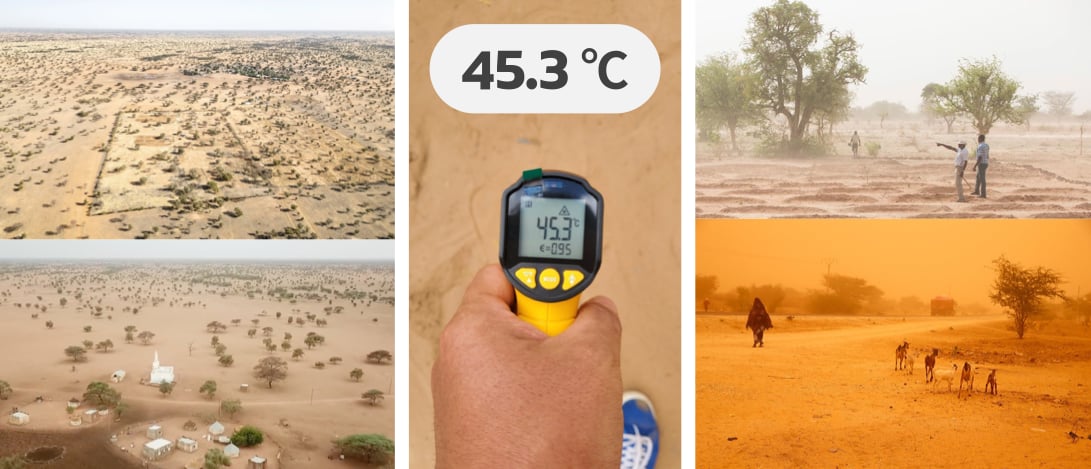
A desertification prevention project in the Sahel region, the frontline of the Sahara Desert
: To effectively halt the Sahara's advance of roughly 10km southward each year, we build an agroforestry model linked to the sustainable livelihoods of local communities.
NGOs give — Nechon earns together. Instead of aid, a self-sustaining revenue structure turns residents from aid recipients into employed farm owners (cooperative members).

Seedling Production
Nechon's No.1 Sahara nursery produces 3,000+ seedlings per month

Site Soil Improvement & Irrigation
Soil improvement and irrigation to enable farming and forest establishment

Seedling Planting & Management
Plant and manage seedlings produced on-site

Agricultural & Forest Monetization
Generate revenue through crops like rice, corn, and potatoes, and established forests

Farm Allocation
Allocate productive farms to outstanding employees
Desert Agroforestry
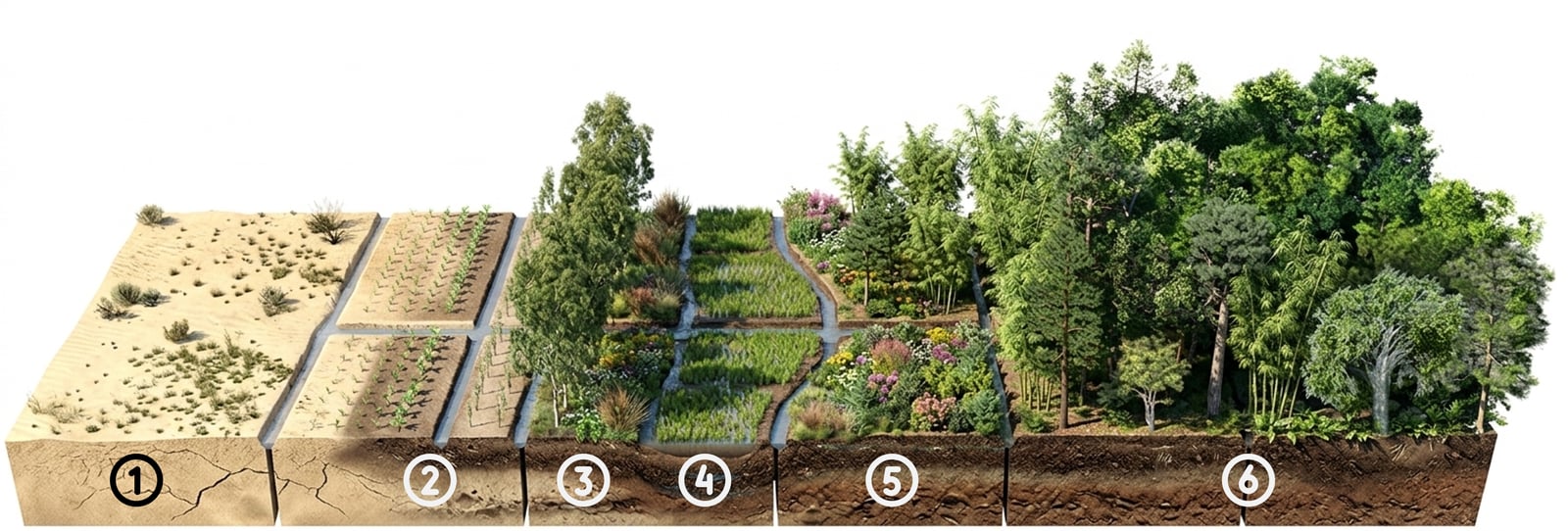
Zebra Farm Solution
An Agroforestry Model Based on Desert Waterways
Desert waterway construction → Windbreak forest along the waterway → Agriculture/forestry development (monetization) → Completion of the desert forest agroforestry model
Degraded Land
Vegetation loss, soil moisture depletion
Waterway Construction
Soil moisture recharge
Windbreak Forest
Blocks sandstorms to protect the growing environment
Artificial Wetland
Paddy field, biomass
Farmland
Crop cultivation for monetization
Desert Forest
Carbon/organic matter fully charged into the soil
Target Plant Selection
- Core Mechanism: Vegetative Propagation & Sprout Regeneration
- Semi-Permanent Vitality: Self-regenerates after cutting, even after only a single initial planting
- Sustainable Reproduction: Continuous ecosystem expansion without artificial re-planting
WATERAC
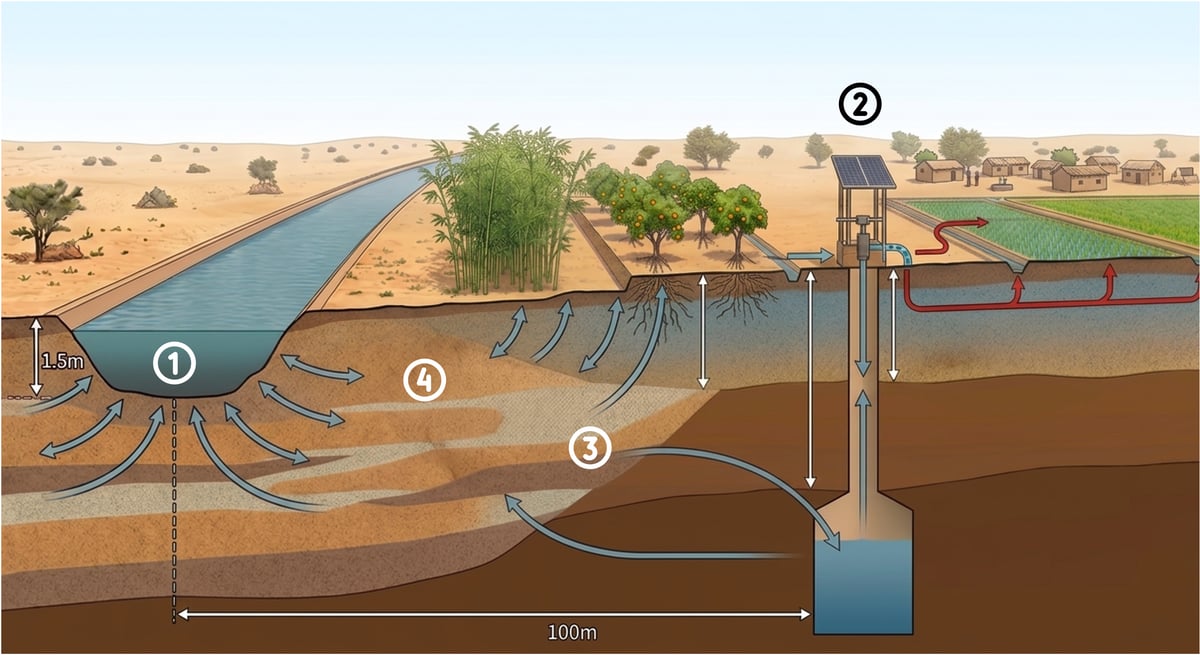
Artificial Groundwater Recharge + River Bank Filtration (RBF)
Optimized for flat, stone-free silty terrain, this method reduces initial construction and maintenance costs compared to conventional approaches.
Fast Construction
Quick to Use
Construction Cost Under 50%
O&M Dredging Cost Under 10%
Nechon Waterway
Groundwater recharge via RBF
Nechon Well
Forms an underground cavity to draw the recharged groundwater
River Bank Filtration (RBF)
Natural infiltration during transit forms an underground moisture corridor
Groundwater Recharge
Rising water table maintains levels even in the dry season
Expected Effects
- Improved storage efficiency during monsoon rainfall
- Reduced water evaporation loss
- Increased soil moisture near waterways enabling irrigation-free afforestation
- RBF (River Bank Filtration) prevents parasitic infection
- Continuous salt leaching reduces salt damage
- Expanded farmable land area
NURSERY
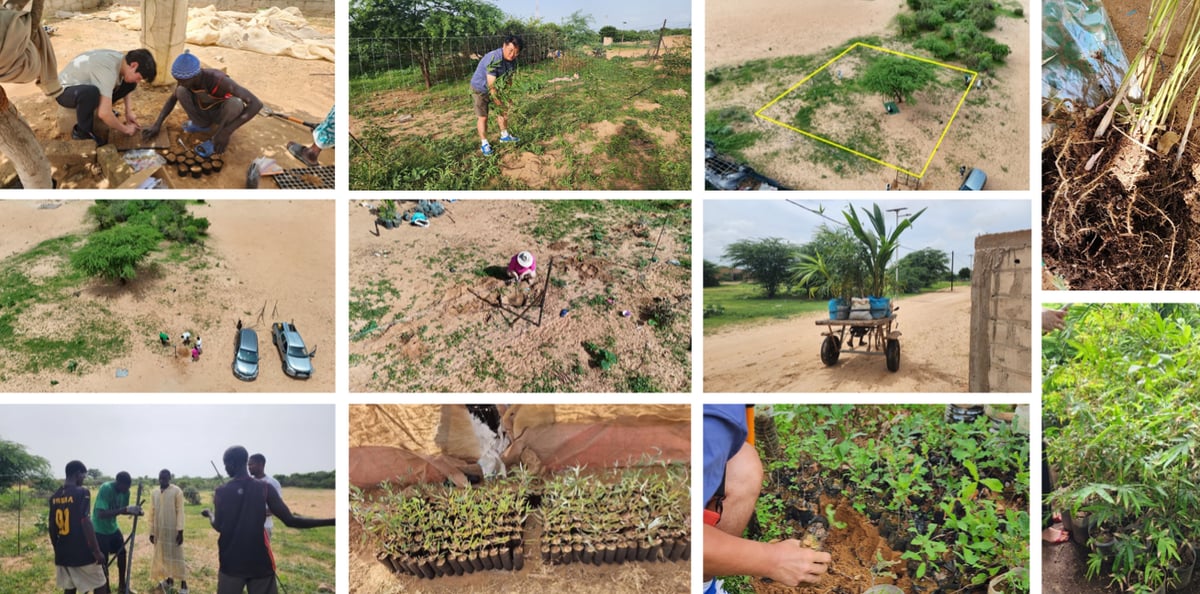
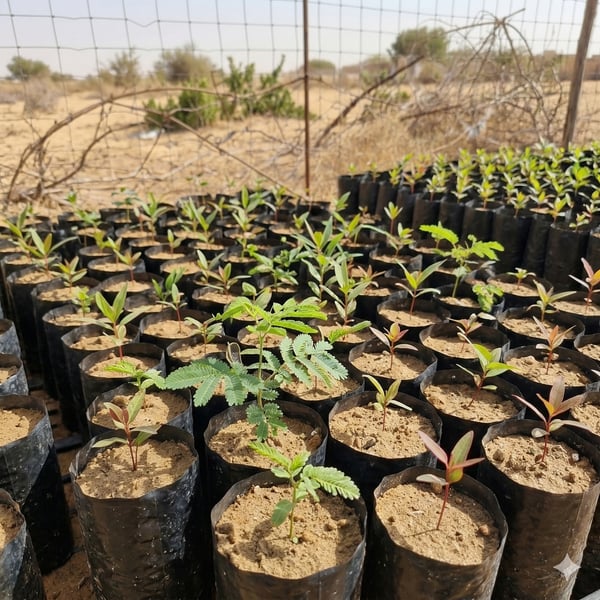
Seed sowing and early seedlings
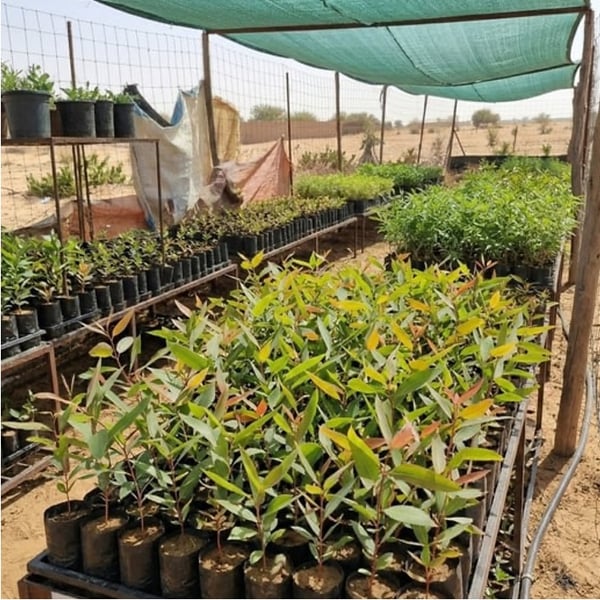
Seedling management
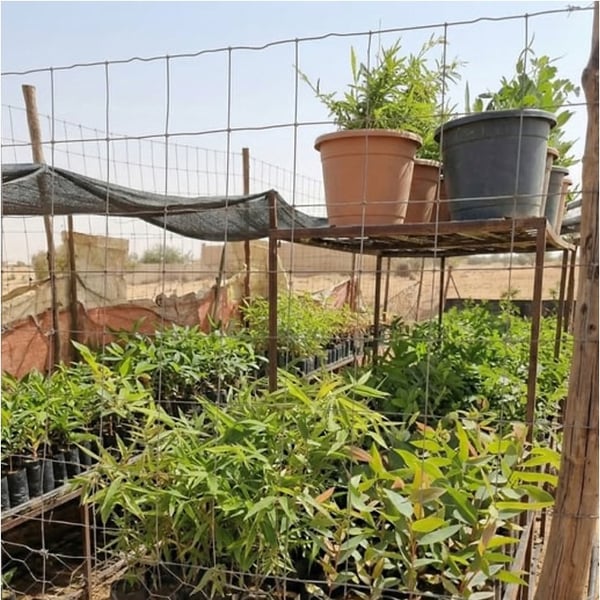
Growth stages
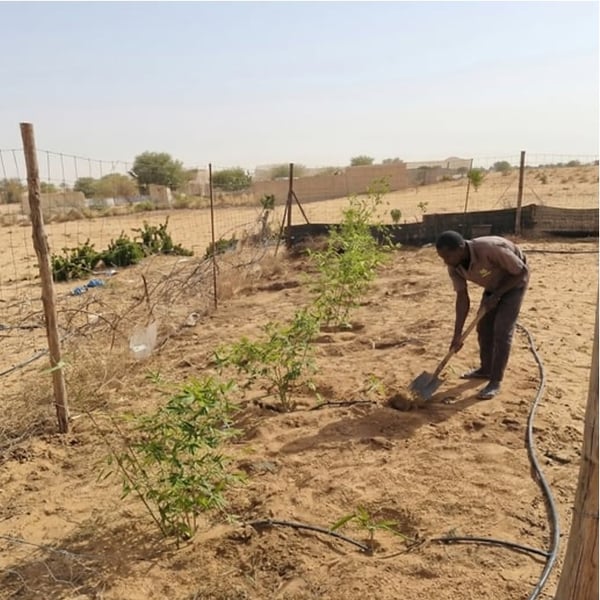
Transplanting and establishment
SAHARA TERRA PRETA
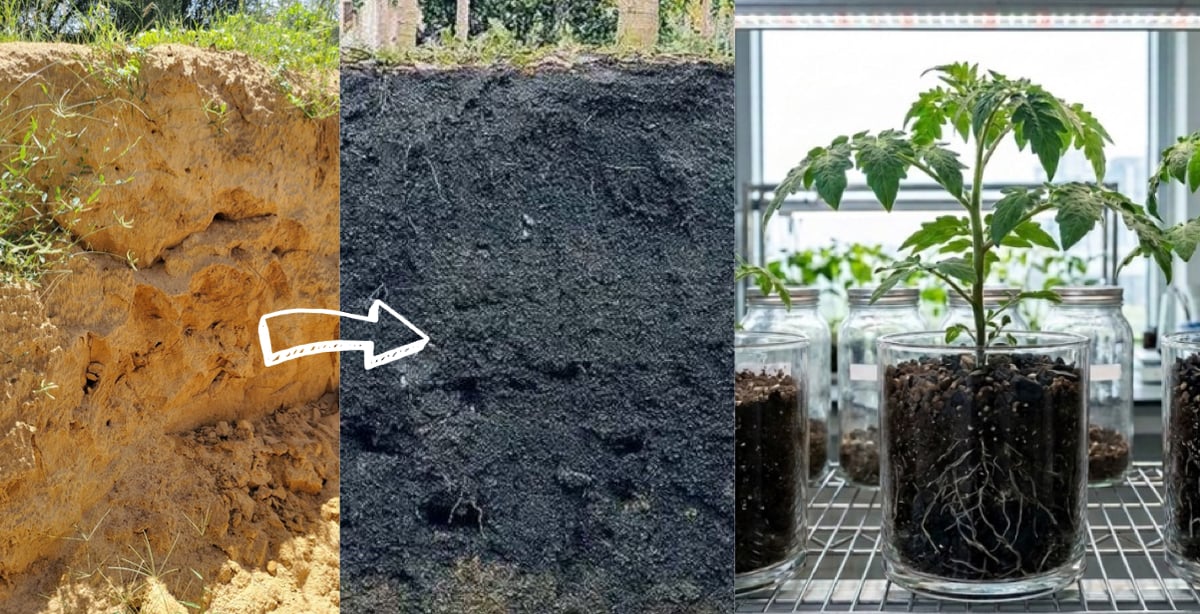
Why Biochar Is Needed to Restore Soil Degraded by Desert Climate
- Carbon sequestration
- Improved drainage through pore formation
- Reduced nitrous oxide emissions
- Soil microbial activation
- Reduced fertilizer use (slow-release effect)
- Moisture retention
- Increased pH in acidified soil
SUSTAINABLE DESERT FOREST CONSTRUCTION
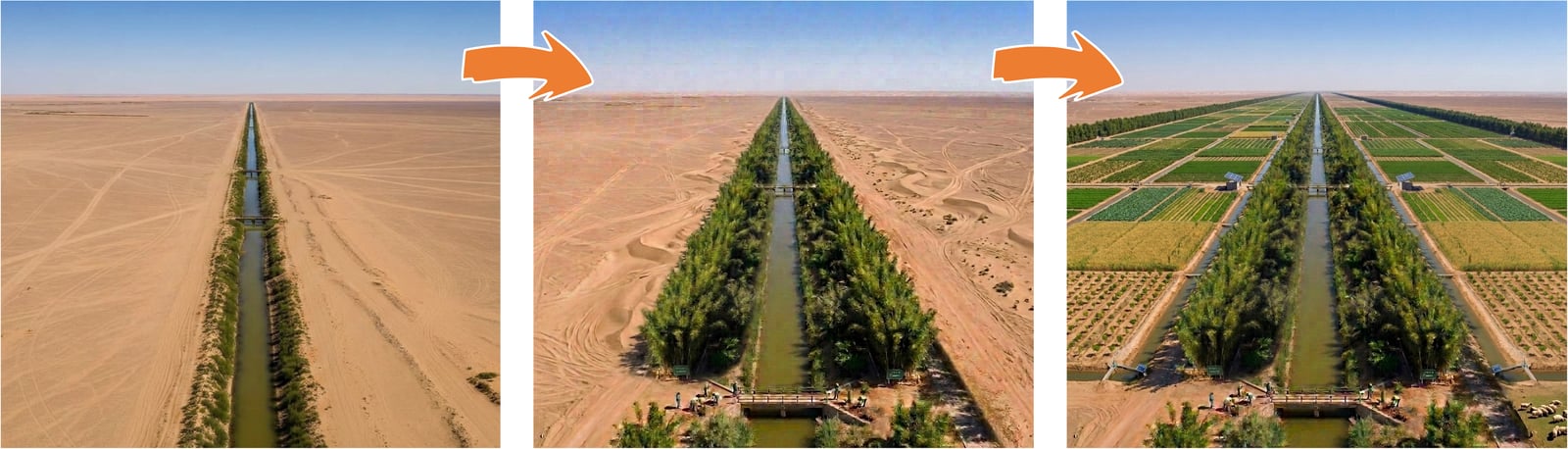
Desert Waterway Construction
Creates a waterway from the Senegal River and nearby lakes into the inland wasteland. Rainy-season water is stored underground, becoming the foundation of life with continuous supply even in the dry season.
Waterway Embankment Greening
Windbreak forests are planted along the waterway to block harsh sandstorms and protect the channel. Established tree roots prevent embankment collapse during the rainy season, enabling stable water supply year-round.
Revenue Generation & Desert Forest Completion
Agriculture and forestry revenue stably operates the waterway and raises farm household income. At the same time, the farm's perimeter is greened to complete a full desert forest.
Global Carbon Reduction
By applying various carbon reduction methods in developing countries
A project to monetize carbon credits
: Combined with the desertification prevention agroforestry business, we achieve carbon neutrality and commercialize carbon credits through various reduction methods including biochar and biomass energy.

Afforestation
New afforestation on degraded land and preventing deforestation

Biochar Production
Sequester carbon by adding biochar to soil amendment and compost

Fossil Fuel Substitution
Convert water pumps, farm machinery, vehicles, and motorcycles to electric

Biomass Energy
Biomass energy generation using resources produced by afforestation
Expected Effect
Expected Effects of Desertification Prevention & Greening
Restores the Sahel desertification zone through agroforestry and water infrastructure to sequester carbon, building a self-sustaining soil and water cycle without chemical fertilizers.
Environment
- • Desertification Prevention: Converts Sahel wasteland to green land, mitigating Harmattan (dry Saharan sandstorms)
- • Carbon Sequestration: Afforestation + biochar → issues carbon credits
- • Microclimate Improvement: Lowers ground temperature → retains soil moisture → improves tree survival rate
- • Water Resource Restoration: Nechon Waterway (aquifer recharge) + Nechon Well (intake) → stabilizes dry-season groundwater levels, aligned with SDG 6
- • Soil Restoration: Biochar, Azolla, and Acacia (nitrogen fixation) → self-sustaining soil without chemical fertilizer
- • Low-Carbon Operations: Solar pumps, donkey carts (charrettes), local material sourcing → minimizes reliance on diesel and imported materials
Through a circular employment structure progressing from temporary worker to partner, with a share of revenue returned as vouchers, local residents (including women) are transformed from aid recipients into self-reliant farm owners.
Social
- • Job Creation: 5-stage advancement from temporary worker → trainee → staff → senior staff → partner, generating on-the-job training at each transition → circular employment
- • Revenue Sharing: Vouchers issued → returned as water purification, fuel, medical, childcare, and education services
- • Women's Participation: Childcare operation and a no-religious-coercion condition remove barriers to women's entry
- • Education Infrastructure: Schools built in proportion to farm area (kindergarten at 100ha to high school at 400ha)
- • Inclusion: Nationality-blind enrollment into a residential zone → assigned a plot → settlement and self-reliance
A joint-venture structure sharing profits among the holdings company, cooperative, and village, combined with mutually-checked fund execution, creates a sustainable and scalable self-reliant revenue model without external aid.
Governance
- • Equity Structure: Profit-sharing among the holdings company, cooperative, and village
- • Fund Principle: Profits reserved → financial soundness
- • Checks & Balances: Village fund spending decided through consultation between Nechon and the village → transparency
- • Sustainability: Self-reliant through business revenue instead of external aid → superior sustainability and scalability compared to the NGO model
Starting in the desert,
agroforestry that saves the earth.